
Most homeowners never think about their drainage system until something goes wrong — a slow drain, a bad smell, or water backing up where it shouldn't. When that happens, a CCTV drain inspection is often the first genuinely useful step, because it replaces guesswork about what's happening underground with an actual view of it.
This guide walks through what a CCTV inspection actually involves, what it can reveal, and what to realistically expect from the process and the report that follows it.
Explore Inside a CCTV Drain Inspection: What Actually Happens Beneath Your Property for our plumbing services, local coverage and enquiry details.
01 / A USEFUL CONSIDERATION
What a CCTV Drain Inspection Actually Is
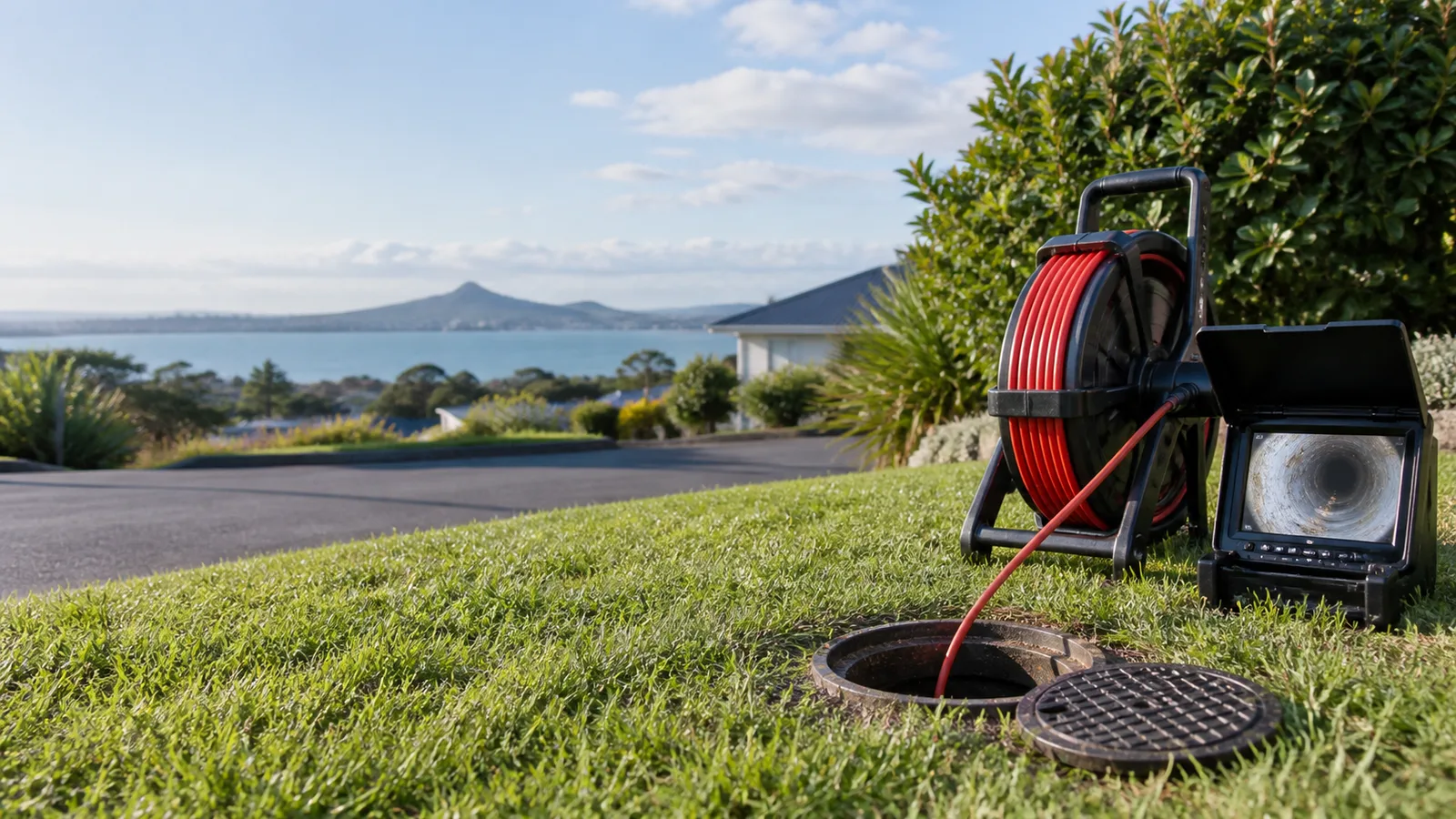
A CCTV drain inspection uses a waterproof camera, mounted on a flexible rod, that's fed directly into your drainage pipes. The camera transmits a live video feed to a monitor the plumber views in real time, allowing them to see the interior condition of the pipe as the camera travels through it.
This is a genuinely different process from a standard drain clear-out. Clearing a drain resolves an immediate blockage; a CCTV inspection is a diagnostic tool that shows you what's actually happening inside the pipe, whether or not a blockage is currently present.
02 / A USEFUL CONSIDERATION
How the Inspection Process Actually Works
The plumber accesses your drainage system through an existing access point — typically an inspection opening, a gully trap, or occasionally the fixture itself for shorter runs. The camera head is then fed through the pipe, with the plumber controlling its speed and direction from the surface.
As the camera travels, its position can usually be tracked from above using a built-in locator signal, allowing the plumber to mark the exact position of anything significant found along the pipe's length — useful information if excavation or a targeted repair later turns out to be necessary.
The entire process is non-invasive. No digging or disruption to your property is required simply to carry out the inspection itself, which is part of what makes it such a cost-effective first step compared to guessing and excavating based on assumption.
03 / A USEFUL CONSIDERATION
What the Footage Actually Reveals
A CCTV inspection can identify a wide range of issues that would otherwise be invisible from the surface. This includes cracked, collapsed, or misaligned pipe sections; root intrusion, where tree roots have entered the pipe through a joint or crack; grease and scale build-up narrowing the pipe's internal diameter; and 'bellied' sections, where part of the pipe has sunk and created a low point that traps water and debris.
It also reveals the pipe's material and general age-related condition, which matters for older West Auckland properties where original clay or earthenware drainage may be nearing the end of its practical service life, even if it isn't causing an active blockage yet.
04 / A USEFUL CONSIDERATION
Understanding Your Inspection Report
After the inspection, a good plumber will provide a report that goes beyond simply saying 'there's a problem' — it should give you enough detail to actually understand your options. A thorough report typically includes:
- Recorded footage or still images of anything significant found along the pipe run.
- The approximate location of each issue, measured from the access point.
- A description of the pipe's material, diameter, and overall condition.
- A clear explanation of what each finding means in practical terms.
- Recommended next steps, ranging from monitoring to targeted repair or full replacement.
05 / A USEFUL CONSIDERATION
When a CCTV Inspection Is Worth Getting
CCTV inspection is most valuable in a handful of specific situations: when a drain keeps blocking despite repeated clearing, when you're buying a property and want to understand the condition of its drainage before committing, before a renovation that will disturb or build over existing drainage lines, and when tree roots are known to be near your drainage system and you want to check for early intrusion before it becomes a full blockage.
It's also a sensible precaution for older properties, simply to understand the baseline condition of pipework you may otherwise know very little about.
06 / A USEFUL CONSIDERATION
What Happens After the Inspection
The findings from your inspection determine the appropriate next step, and this varies considerably depending on what's found. Minor build-up might simply need a thorough clean. Root intrusion in an otherwise structurally sound pipe can often be treated with mechanical root cutting followed by pipe relining, which seals the pipe from the inside without excavation. More significant structural damage — a collapsed section or severe misalignment — usually requires targeted excavation and repair, or in some cases, replacement of that section of pipe.
A responsible plumber will walk you through these options with the footage as evidence, rather than recommending the most expensive fix by default.
07 / A USEFUL CONSIDERATION
How Long Does It Take, and What Does It Cost?
A standard residential CCTV inspection typically takes between 30 minutes and an hour, depending on the length and complexity of the drainage system being inspected. Cost varies based on the length of pipe being inspected and accessibility, but it's generally a modest cost relative to the value of the information it provides — particularly compared to the cost of excavating blind based on assumption, only to find the actual problem is somewhere else entirely.
08 / A USEFUL CONSIDERATION
What CCTV Inspection Can't Tell You
It's worth being realistic about the limits of the technology. CCTV inspection shows the interior condition of the pipe, but it can't measure exact soil conditions around the pipe, definitively predict when a compromised but still-functioning section will eventually fail, or inspect sections of pipe that are completely blocked until at least a partial clear has been carried out first.
It's a highly effective diagnostic tool, but it's one input into a decision — not a substitute for a plumber's judgement about what the findings actually mean for your specific property.
09 / A USEFUL CONSIDERATION
Preparing Your Property for an Inspection
There's generally very little preparation required on your part. Clear access to any external inspection points or gully traps is helpful, and letting the plumber know about any known history — previous blockages, recent tree work, past drainage repairs — helps them interpret what they're seeing more accurately once the camera is underway.
010 / A USEFUL CONSIDERATION
Demystifying What's Beneath Your Property
A CCTV drain inspection turns an invisible system into something you can actually see and understand, which makes every decision that follows — repair, reline, replace, or simply monitor — a genuinely informed one rather than a guess. If you're dealing with a recurring issue, or simply want to understand the condition of pipework you've never had reason to question, it's one of the most useful and cost-effective steps you can take.
Turn the reading into a useful enquiry.
Gather the details relevant to your property, including any product information or previous findings. The next recommendation should respond to your actual setup.
Explore the related service